.
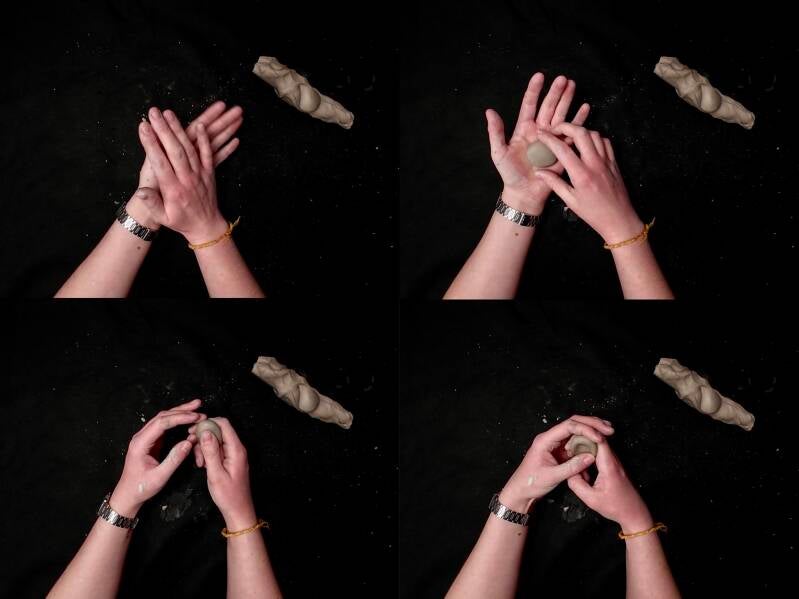
At the core of this project is an appreciation for the benefits that come from in person engagement within the queer community. The ceramic elements of the project reflect this appreciation of engagement by focusing on the materiality of clay as a material, over the material as a future ceramic object defined by aesthetic or functional purposes.
Engaging with clay offers a unique tactile experience shaped by the intuitive and calming nature of the material. Focusing on this experience emphasises the present, encouraging a stronger connection to the moment of making, the tactile experience, and the surrounding environment that contribute to the space created.
This project is guided by research on the materiality of clay, its use in the field of psychotherapy, and applications of its beneficial material properties in artistic practices. Subtle Ground, developed by Priska Falin and Helen Felcey, is a ceramic making method which 'directs attention during and through making clay... focusing on being with the material instead of pursuing a conclusion in the creative process'. Subtle ground offers an appreciation for clay that this project undertook.

Being touched through touch. Trauma treatment through haptic perception at the clay field. Antcliff and Elbrecht (2014)

Subtle Ground: feeling our way towards a supportive method in ceramic practice. Falin and Felcey (2022)
Ceramics Facing the New. Falin and Felcey (2022)
Ceramic Pebbles s sensory tools: exploring the quality of muteness in tactile experience. Falin and Oksanen (2021)
Relating to clay: turning in ti the workings of the aesthetic dimension in ceramic practice.Falin (2022)


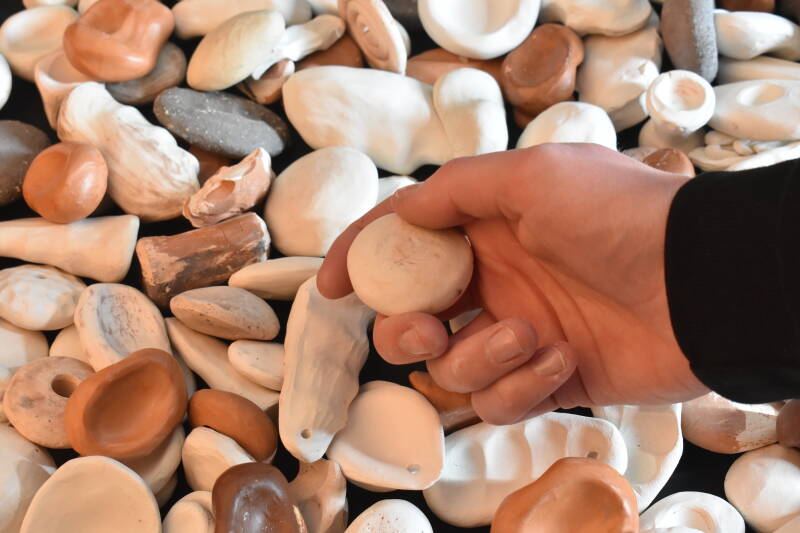
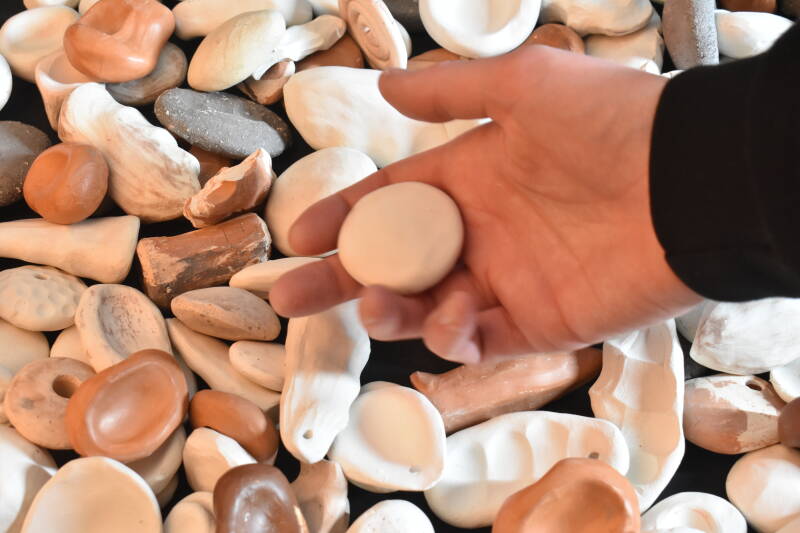
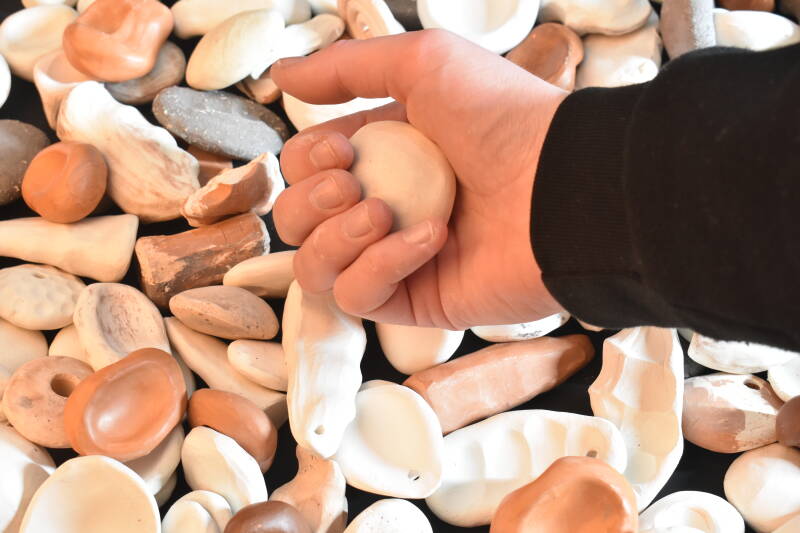
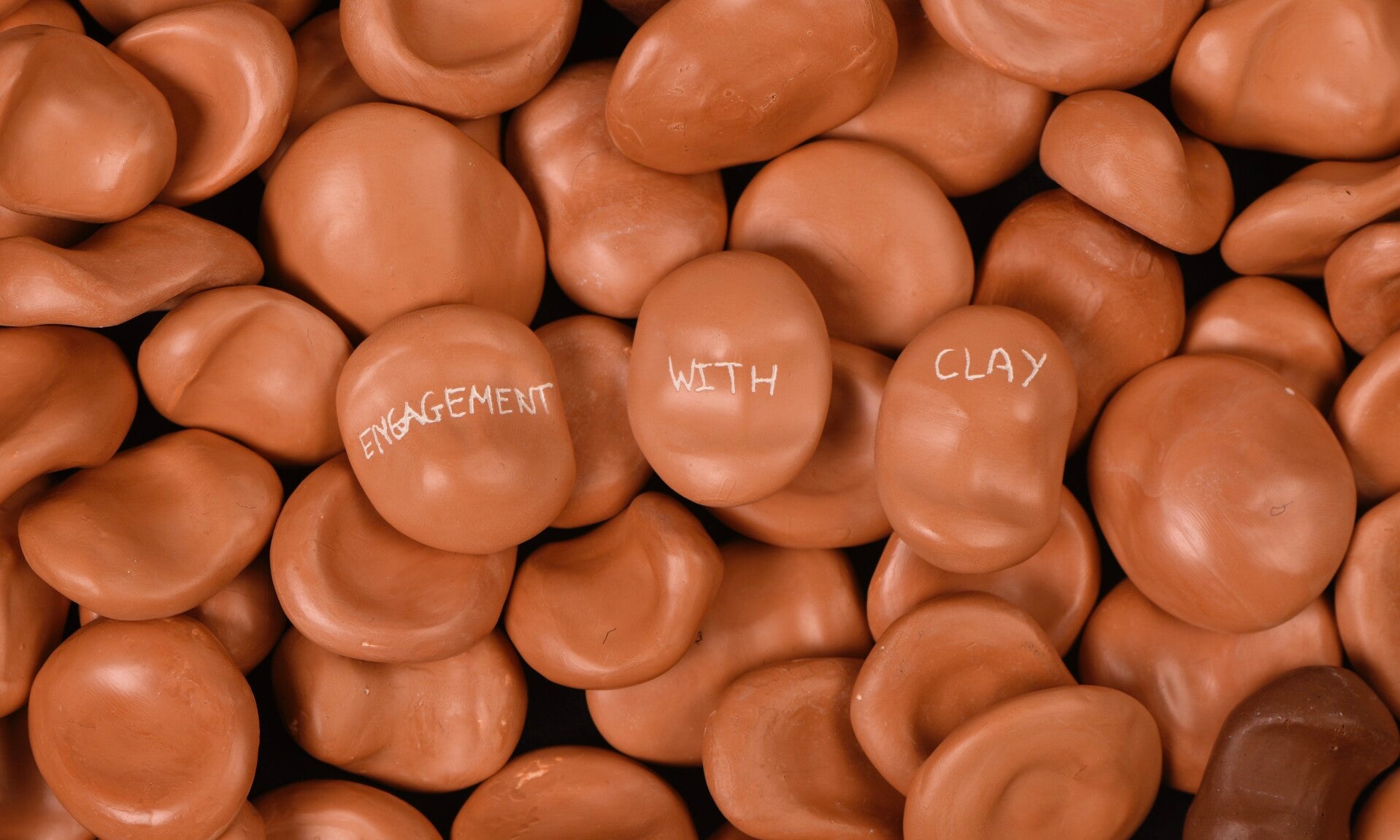
Being hand-made, considered individually, each rock is entirely unique. The objects made during this project were inspired by the notion of comfort and shaped by the intuitive properties of clay at every stage of making. A variety of clay bodies were tested to see what could emerge from the tactile experience they offered based on material properties. The clay most predominantly used was white stoneware which has a an extremely soft texture and high plasticity.
The use of terra sigillata, a refined terracotta slip, and the act of burnishing, polishing clay, allowed for a continuation of the appreciation of the materiality of clay even once it was in the form of greenware. As an attention to detail in which each object is attempted to be "perfected", this reflects an act of care experienced within the queer community.
Once fired, the objects act as worry stones, a literal object that can bring comfort while simultaneously being representative of comfort.